
You’ve seen the photos. A copper hood front and center, a couple of thick wood shelves on each side with white plates and a jar of wooden spoons, and not a single upper cabinet in sight.
It’s a good look. The catch? That wall takes every bit of heat, steam and grease your stove puts out, and a shelf has no door to hide behind.
So do it in order. Hood first. Get its size, height and ductwork worked out for the cooktop you actually have, because once a duct is framed into the wall, moving it is a real project.
Shelves are easy to shift. Plan them second.
The planning numbers
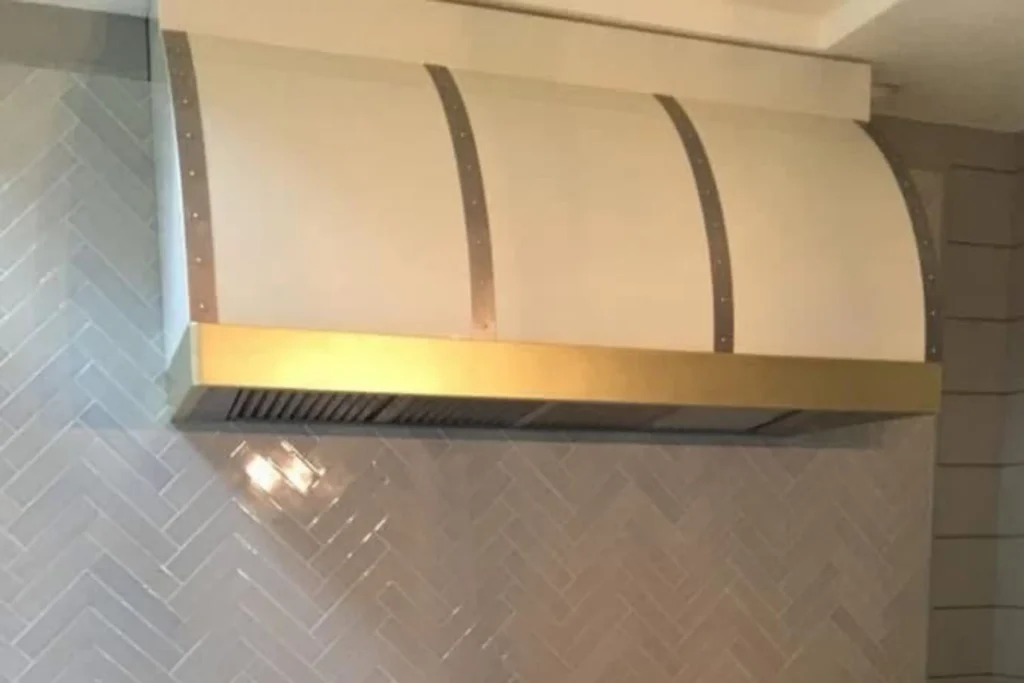
Range Hood Planning
| What to plan | Starting point | Why it matters |
| Hood height above cooktop | 30 to 36 inches | Too high and it captures less |
| Hood width | At least the cooktop, often wider | Catches smoke off the side burners |
| Hood depth | Covers back burners and half the front ones | Covers where most steam rises |
| Shelves above cooking surface | Per your range’s installation manual | Clearances vary by model |
| Airflow, gas range | 100 CFM per 10,000 BTU | Gas burners put out more heat |
| Airflow, electric range | 100 CFM per 10 inches of width | Sized to the cooktop |
| Duct | Metal, short, few bends | Air slows down at every turn |
How high should the hood go?
Somewhere between 30 and 36 inches above the cooktop, measured to the bottom of the hood. That covers most kitchens.
Here’s where shelves can trip you up. It’s really tempting to have the bottom shelf and the bottom of the hood sit at the same height. Clean line, looks great in a rendering. But if matching the shelf means pushing the hood up, you lose suction where it counts. So set the hood height for whoever does most of the cooking, then decide if the shelves match it or float a bit higher.
How wide and deep should the hood be?
Wide enough to catch what comes off the burners.
Match the cooktop at minimum. Plenty of designers go past it. A remodeler quoted in the Journal of Light Construction adds 3 inches per side, which turns a 36-inch cooktop into a 42-inch hood. For depth, that article says to cover every back burner and at least half of each front one.
Here’s where open shelving pushes back. A wider hood eats into the shelf run on each side. Before you buy shelves, draw the hood at full width on the wall, tape it out if you can, and see what’s actually left. We make hoods in standard sizes from 30 to 60 inches, and since every RangeCraft hood is made to order, the width can be built for your wall instead of forcing the wall to fit a stock size. More on that in Why is a Custom Kitchen Range Hood so Special?
How close can open shelves be to the cooktop?
Open the installation manual for your range or cooktop. That’s the number that counts, and it’s different from one model to the next.
Just so you have a ballpark: one KitchenAid gas cooktop manual wants 30 inches minimum from the cooking surface up to any cabinet overhead. Cabinets off to the sides? 18 inches above the cooking surface, at least. A wood shelf will catch fire just as easily as a cabinet will, so give it the same room.
Shallow shelves help, too. The farther the front edge sits from the pots, the less heat and steam it takes. That same JLC article mentions a designer who cuts down the depth of the cabinets flanking a hood for this reason. Works the same with shelves.
How much airflow does the hood need?
Depends on what you’re cooking on.
Gas burners run hot, so figure at least 100 CFM for each 10,000 BTU your burners add up to. On an electric range, go by width instead, about 100 CFM per 10 inches. A 36-inch electric cooktop lands right around 360.
(CFM means cubic feet per minute. It’s how much air the hood pulls.) Every RangeCraft hood we build to order already has the lights, filters, switches and a blower in it, rated anywhere from 600 to 1,400 CFM.
Going big? Call your building department before you order. Under the International Residential Code, a hood pulling over 400 CFM can mean you also need makeup air, meaning a way to let fresh air back in. Since the 2018 edition, that’s tied to whether the house has naturally drafted fuel-burning appliances, like an older gas water heater. Your local inspector will know what your house needs.
How should the duct run?
Short, straight and metal. That’s the rule we give every customer.
No flex duct if you can help it. The ridges inside drag on the air, so smooth metal is the way to go. And never, ever plastic or that skinny 4-inch dryer duct. You need at least a 3-1/4 by 10-inch duct, or about 6 inches round, and some hoods call for as much as 10 inches round. Every turn costs you airflow, so keep them to a minimum and use 45s over 90s. The end of that duct has to be outdoors. Not inside the wall, not up in the attic, not the crawl space, not the garage.
One more thing to map out. Heavy shelves need brackets and blocking in the wall. Sometimes that blocking lands right where the duct wants to go. Map both before the drywall closes up.
Can a quieter blower help an open-shelf design?
It can. A blower built into the hood is the loudest setup, and a steel canopy can make that sound louder. Moving the blower into the ductwork or outside the house cuts the noise in the kitchen. We break down the options in Internal vs Inline vs Remote Blowers: Which Range Hood Blower Is Right for You?
How do you tie the hood and shelves together visually?
Let the hood lead and the shelves follow.
A copper or brass hood looks great with warm wood shelves and brackets in a matching metal. Blackened steel pairs well with chunky reclaimed boards. Our Metal Range Hood Options and Hardware Accent Options, things like bands, rivets and pot rails, give you a lot to work with. Working with a slanted ceiling? There’s a whole post on that: Custom Range Hoods for Vaulted and Sloped Ceilings: What Homeowners Need to Know.
Frequently asked questions
How far above the stove should a range hood hang?
30 to 36 inches from the cooktop to the bottom of the hood works for most kitchens.
Is it OK to have open shelves next to a range hood?
Sure, as long as you follow the clearances in your range manual. Keep them shallow, and keep them out of the hood’s way.
What CFM do I need?
On gas, 100 CFM for every 10,000 BTU. On electric, roughly 100 CFM per 10 inches of cooktop.
What kind of duct should a range hood use?
Smooth metal duct, as short and straight as possible. Never plastic or 4-inch dryer duct.
Planning a kitchen with open shelving? RangeCraft has been building custom range hoods in Fair Lawn, NJ since 1972, each one made to order. Call 201-791-0440 for a free estimate, browse our Shapes and Styles Options, or contact us.