
Most people put serious money into their kitchen countertops or appliances. The ventilation hood? That usually gets whatever’s left in the budget.
But there’s a growing segment of homeowners who’ve figured out that the space above your cooktop doesn’t have to be an afterthought. Custom range hoods with Swarovski crystals are changing how designers think about kitchen ventilation.
These aren’t subtle. A Swarovski crystal range hood catches light like jewelry, which is exactly the point. The crystals create this interplay with whatever natural or artificial light you have in the kitchen.
Early morning sun hits differently than pendant lights at dinner time, and the crystals reflect both in their own way.
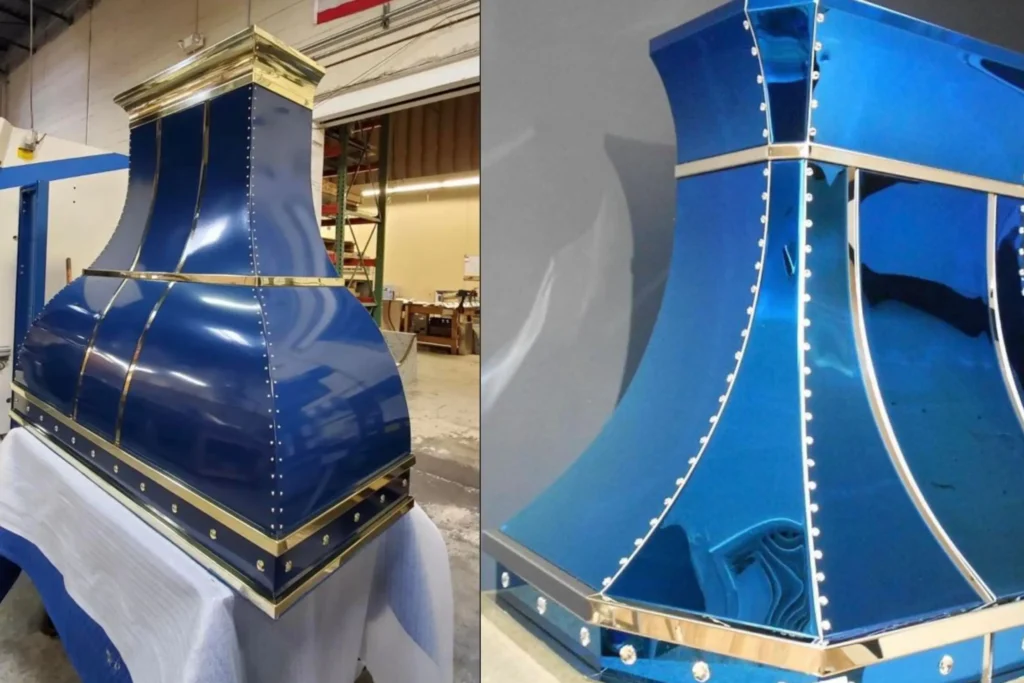
Swarovski Crystal Range Hood Custom Design
Why Swarovski Crystals Work in Kitchens
Swarovski has been cutting crystals since 1895. They know what they’re doing. The crystals are precision-cut with specific facets that maximize light refraction. When you put that level of craftsmanship on a range hood, you get something that performs optically in ways cheaper crystals just can’t match.
The heat concern is real, but manufacturers have solved it. Swarovski crystals can handle temperature swings. The adhesives used to attach them are rated for kitchen environments. These aren’t going to pop off when you’re searing a steak at high heat. The crystals sit on the exterior surfaces where they’re not directly exposed to cooking heat anyway.
How Custom Range Hoods Get Built
The Base Material Matters
Stainless steel works for contemporary kitchens. It’s clean, it’s modern, and it provides a neutral backdrop that lets the crystals do the talking. Copper is a different story. It develops this patina over time that brings warmth to the space. Brass gives you that golden undertone that works in transitional or traditional designs.
The metal you choose changes how the Swarovski crystals interact with light. Stainless reflects it back sharply. Copper absorbs some and warms what it reflects. Brass adds its own color to the mix. Your fabricator should walk you through this because it affects the finished look more than you’d think.
Pattern Choices Change Everything
Some people want crystals concentrated around the trim edges. Others go for full coverage. Linear patterns read as contemporary. Clustered arrangements feel more traditional or ornate. There’s also the option to create custom patterns based on specific designs you bring to the table.
The crystal density affects the overall impression. Heavy coverage creates that “wow” factor but can read as too much if your kitchen already has other strong design elements. Lighter crystal application lets the hood remain a focal point without overwhelming the space. This is where working with someone who knows kitchen design pays off.
Getting the Sizing Right
Standard range hoods come in set widths. Custom range hoods throw out those limitations. Your cooktop might be 36 inches, but your hood can extend to 48 or 60 inches if that works better with your island or wall configuration. The hood can incorporate curves, angles, or architectural details that match other elements in your kitchen.
Clearance heights are non-negotiable. Gas ranges need 30 inches between the cooktop surface and the bottom of the hood. Electric cooktops can work with 24 inches. These are code requirements, not suggestions. Your fabricator builds these measurements into the design from the start.
The Ventilation System Still Has a Job to Do
The crystals live on the outside. The ventilation system operates inside, completely separate from the decorative elements. You’re getting CFM ratings (cubic feet per minute of air movement) that match or exceed what you’d get from a standard hood at the same price point.
Variable speed fans are standard on most custom builds. You run lower speeds for everyday cooking. Crank it up when you’re doing serious high-heat work. The crystals don’t affect airflow because they’re nowhere near the ventilation path.
Grease is your enemy with any range hood. The crystals can be cleaned, but you need to follow the care instructions your fabricator provides. Different adhesives and finishes require different approaches. Regular maintenance keeps everything looking right.
What You’re Actually Paying For
Entry-level Swarovski crystal range hoods start around $8,000. Complex designs with full crystal coverage and architectural details can push past $30,000. You’re paying for engineering, materials, hand-application of each crystal, and a ventilation system that actually works.
These installations last. Twenty years isn’t unusual if you maintain them properly. The crystals themselves are durable. Quality metal fabrication resists corrosion. You’ll replace fan motors or lights eventually, but those are serviceable components on any hood.
The resale value question comes up. High-end buyers notice distinctive kitchen features. A well-executed crystal range hood becomes a selling point. Real estate agents in luxury markets will tell you that unique, quality elements move properties faster in their price bracket.
Your kitchen hood doesn’t have to be boring. Swarovski crystals prove that functional ventilation can also be a design statement. They bring light, luxury, and a level of craftsmanship that most kitchens never see.