
I’ll be honest – I never thought much about range hoods until I was standing in my half-finished kitchen renovation staring at this giant stainless steel box hanging over my new cooktop. It looked fine. Professional, I guess. But it also felt really boring, and worse, it didn’t match anything else I’d picked out. My cabinets were this warm cream color, I had oil-rubbed bronze hardware, and butcher block counters. And then there’s this shiny steel hood just sitting there looking like it belonged in a restaurant kitchen.
That’s when my contractor mentioned powder coating. I didn’t even know you could do that. Turns out you can get a custom range hood in basically any color you want, and the finish is way more durable than regular paint. I ended up going with a soft bronze that matched my hardware, and it completely changed how the kitchen felt. Instead of this appliance that stuck out, it became part of the design. Kitchen jewelry, my designer friend called it later, and yeah, that’s exactly what it is.
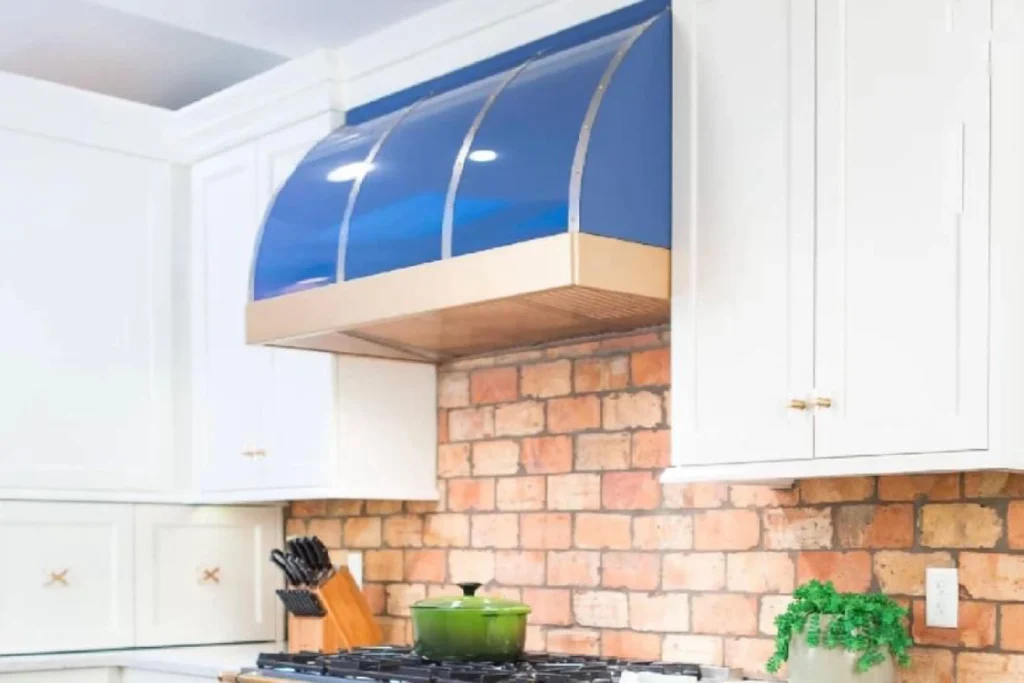
Powder-Coated Range Hoods For Your Style
Powder-coated range hoods aren’t common knowledge, which is weird because they solve a problem a lot of people have. You spend all this time picking out the perfect cabinet color, agonizing over backsplash tile, and choosing hardware that’s just right. Then you get to the hood and your options are stainless steel or… stainless steel. Maybe white if you’re lucky. It doesn’t make sense.
How Powder Coating Actually Works
So powder coating isn’t just spray paint. I thought it was at first. The process is actually pretty cool – they use these charged powder particles that stick to the metal electrostatically, then bake the whole thing in an oven. The powder melts and fuses into this really hard, solid coating. It’s way tougher than paint because it’s literally bonded to the metal.
This matters in a kitchen because you’re cooking. There’s heat, there’s grease splattering, there’s steam, you’re wiping it down with whatever cleaner you grabbed from under the sink. Regular paint would chip and fade pretty quickly under those conditions. I’ve seen painted hoods that looked rough after just a year or two. Powder coating holds up. Mine’s been there for almost four years now and still looks brand new.
The heat resistance is big too. When I’m searing something or have multiple burners going, it gets hot up there. A painted hood would probably discolor over time from that heat. Powder coating doesn’t care. It was baked at way higher temperatures than your cooktop puts out, so kitchen heat is nothing.
Why Color Changes Everything
Walk into most kitchens and the hood is either stainless or maybe white. Stainless became the default at some point – probably because it matches fridges and dishwashers and looks sort of professional. But not every kitchen needs that restaurant vibe. My friend Sarah has this beautiful farmhouse kitchen with white cabinets and these gorgeous dark wood floors. She kept the stainless steel hood that came with the house and it always looked wrong to me. Too cold. Too modern for the space.
She finally replaced it last year with a custom range hood powder-coated in this soft, muted blue-gray. The difference was dramatic. Suddenly, the hood felt intentional instead of like an appliance they had to have. It tied into the blue she’d used in her backsplash tiles and made the whole kitchen feel pulled together.
That’s the thing about color – it connects stuff. If you’ve got brass hardware on your cabinets, you can powder coat your hood in a warm brass tone. If your kitchen has black accents, a matte black hood reinforces that. If everything’s warm and creamy, you can continue that warmth instead of interrupting it with cold stainless.
You can also use color to make the hood a focal point if you want. I’ve seen kitchens where the hood is the statement piece – deep emerald green, rich navy, even burgundy. Against a neutral background, a boldly colored hood becomes the thing people notice first. It’s risky, but when it works, it really works.
Picking Colors for Different Kitchen Styles
Traditional kitchens usually stick with safer colors. Whites, creams, soft grays, bronze tones. These feel classic and won’t look dated in ten years. If you’ve got raised panel cabinets and granite counters, a cream or soft gray powder-coated hood fits right in without calling attention to itself.
Modern kitchens can handle more drama. Matte black is everywhere right now, and it looks incredible in a contemporary kitchen with clean lines. True white creates this crisp, sharp look. I’ve even seen metallic finishes – brushed gold, copper – in modern spaces where they’re already using those metals in light fixtures and cabinet pulls.
Most of us have kitchens that fall somewhere in between – transitional or modern farmhouse or whatever you want to call it. These kitchens need color that adds interest without going crazy. A custom range hood in sage green or a muted blue gives you personality without overwhelming the space. It feels curated, not matchy-matchy.
The Practical Stuff Nobody Tells You
Beyond the looks, powder-coated range hoods just work better day-to-day. I cook a lot – like, a lot. That hood gets hit with grease, steam, and the occasional splatter when I’m not paying attention. I clean it maybe once a week with degreaser, and I’m not gentle about it. The finish doesn’t budge.
Compare that to my sister’s hood, which came painted white from the manufacturer. She’s had it for maybe two years and the paint around the edges is already chipping. There are spots where grease has basically stained the paint, no matter how much she scrubs. She’s talking about replacing it, which seems crazy for something that’s barely two years old.
The durability is worth the extra cost. A custom range hood with powder coating costs more upfront than a basic stainless one, yeah. But you’re not repainting it in three years. You’re not replacing it because the finish looks trashed. You install it and you’re done. For something that sits right in the middle of your kitchen, taking up visual space, that peace of mind matters.
Getting the Color Right
Picking the actual color is trickier than you’d think. I learned this the hard way. I picked my bronze color off a tiny sample chip, and when the hood showed up, it looked way more orange than I expected. The metal surface reflects light differently than a paint chip does, so colors can shift.
Most good hood manufacturers will send you actual metal samples with the powder coat finish. Get these. Don’t try to pick from a digital photo or a paint chip. I held my samples up in the kitchen at different times of day – morning when we get direct sun, late afternoon, evening with the overhead lights on. The color looked different in every scenario.
You also have to think about your cabinets and what undertones they have. My cream cabinets have warm, yellow undertones, so I needed a bronze with warm tones too. If I’d gone with a cool-toned gray, it would’ve clashed even though gray and cream can work together. Undertones matter more than the actual colors sometimes.
Making It Pop or Blend
There’s no right answer on whether your hood should stand out or disappear. I’ve seen both approaches work. My neighbor has a black hood against white cabinets and white subway tile – that hood is definitely making a statement, and her kitchen looks amazing. Meanwhile, my hood basically blends with my bronze hardware and you don’t really notice it unless you’re looking for it, and I like that too.
If you want your powder-coated range hood to be the star, go with contrast. Dark against light, bright against neutral, bold against understated. Put some lighting inside the hood to highlight it even more. Make it the thing people see when they walk in.
If you want it to blend, match it close to your cabinets or your walls. A cream hood against cream cabinets almost disappears. A gray hood with gray backsplash tile fades into the background. This lets your other choices – your island, your backsplash pattern, your light fixtures – be the memorable parts.
I didn’t know any of this stuff before my renovation. I thought a hood was just a hood – pick stainless or white and move on. But treating it like kitchen jewelry, like an actual design element you can customize, opened up options I didn’t know existed. My kitchen feels more cohesive and more like mine because I took the time to get the hood color right. That’s worth something.